Munster just went through a rough stretch of weather, and if you’re reading this, you’re probably wondering whether your roof came through it okay. That’s a smart thing to wonder about. Roof damage is sneaky. A shingle can lift, a seal can crack, or a piece of flashing can shift just enough to let water in, and none of it is obvious unless you know where to look.
The good news is that you don’t need to climb up on your roof or become a construction expert to get a sense of how your home fared. You just need a plan. Here’s what to check, in what order, and why it matters.
Step 1: Start From the Ground Safely

Before anything else, resist the urge to grab a ladder. After a storm, roofs can be more dangerous than usual. Wet or loose shingles, weakened decking, and downed branches all make climbing up there a bad idea, especially if you’re not a roofing professional. The smart move is to walk around your property at ground level and look up.
Here’s how to do that check:
- Walk the full perimeter of your house, not just the front yard.
- Look for shingles that seem out of place, curled at the edges, or missing altogether.
- Check the roofline for any obvious sagging or dips that weren’t there before.
- Use binoculars if you have them, so you can get a closer look without any risk.
- Take a few photos as you go, even if nothing looks alarming yet. It’s easier to compare “before and after” later if something changes.
While you’re out there, glance at your yard too. A scattering of granules that look like coarse sand near your downspouts is often a sign that shingles are wearing down or were damaged by hail. Broken tree limbs resting against the house, dented vents, or bent gutters are all worth noting as well. None of this tells you exactly what’s wrong up top, but it gives you a starting point.
Step 2: Check Gutters and Downspouts

Gutters do more work than most people realize, and after a storm they’re one of the first places trouble shows up.
Work through these questions as you walk your property:
- Are there sections of gutter that pulled away from the roofline?
- Do you see any dents from hail or falling debris?
- Are downspouts clogged, or draining somewhere they shouldn’t?
- Are granules collecting in the gutter troughs?
If you notice water stains running down your siding, that’s often a clue that a gutter overflowed or came loose during heavy rain. It doesn’t automatically mean your roof itself is damaged, but it’s worth flagging, since gutters that aren’t working properly can lead to water pooling near your foundation or seeping under roofing edges over time. A visual check from a stable step stool or a safe height is enough for now. No need to get up on the roof itself.
Step 3: Look Inside the Home for Signs of Moisture
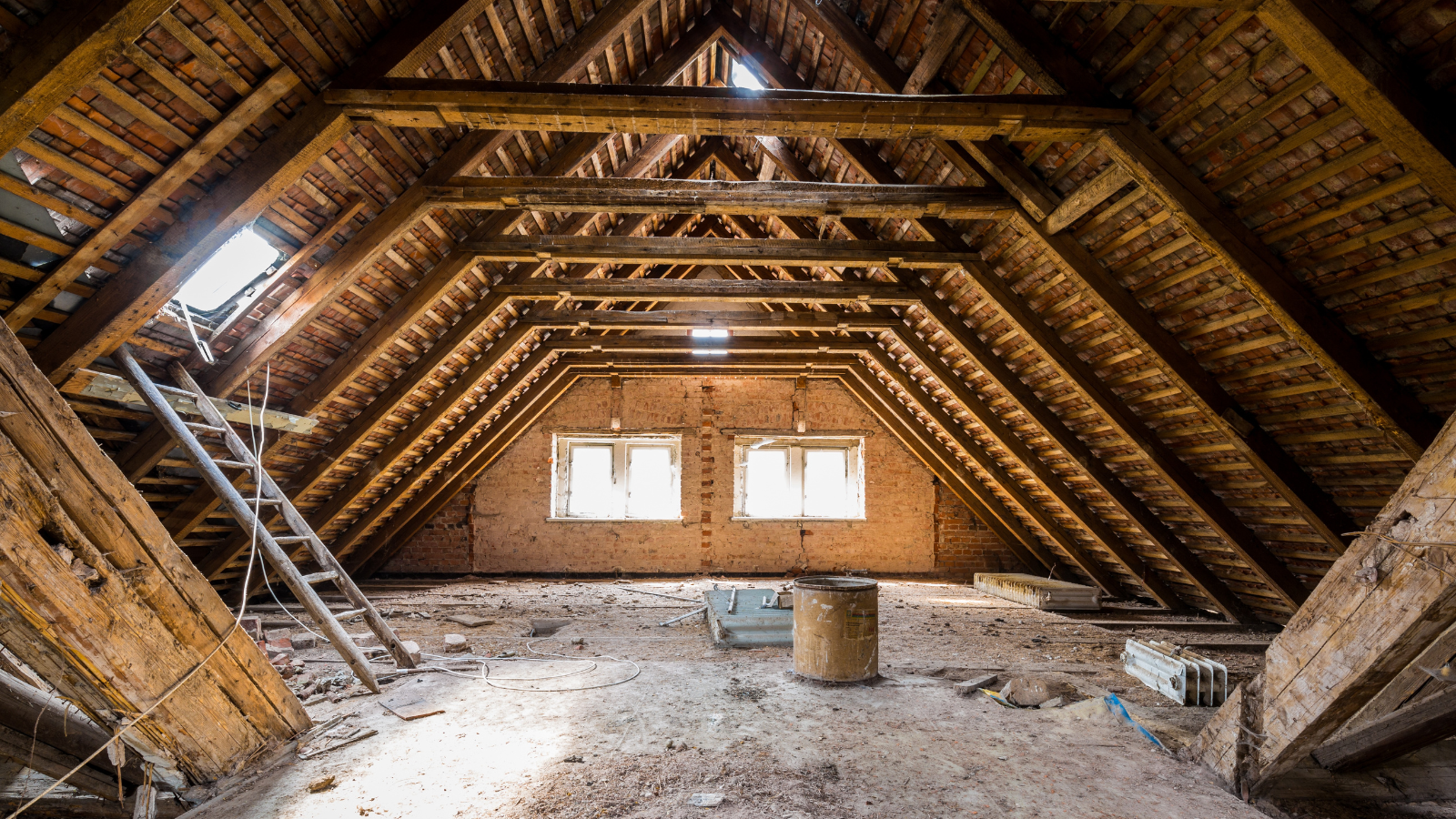
This is the step people skip most often, and it shouldn’t be. Roof damage doesn’t always show up outside first. Sometimes the earliest sign is a small stain on your ceiling or a musty smell in the attic that wasn’t there last week.
- Grab a flashlight and head up to your attic, if you have one.
- Look for moisture on the underside of the roof decking, dark staining, or insulation that feels damp to the touch.
- Walk through the upper floors of your home and check ceilings and the tops of walls for discoloration, bubbling paint, or soft spots in drywall.
- Don’t skip bathrooms and closets near exterior walls. They’re easy to overlook just because they’re small.
- Trust your nose. If a room smells musty when it usually doesn’t, take a closer look.
Even a small, isolated stain is worth noting, since a slow leak can take a while to become visible on your ceiling below. Moisture problems don’t always show up right after a storm either. Sometimes it takes days, or even a couple of weeks, for a stain to appear as water works its way through layers of roofing material and insulation. That’s a good reason to check again a week or two later, even if everything looks fine today.
Step 4: Document Visible Damage Safely

Once you’ve done a walk-around and checked inside, gather what you’ve found into one place. This step matters more than people expect, especially if you end up filing an insurance claim.
- Take clear photos of anything unusual, including missing shingles, dented vents, damaged gutters, water stains, and any debris that hit the house.
- Get both wide shots that show the general area and closer shots of specific damage.
- Photograph your whole roofline from the street or yard if you can do it safely.
- Write down the date of the storm along with a few notes about what you observed and when.
- Keep your photos and notes together in one folder on your phone or computer, so everything is easy to find later.
It’s easy to forget details a few weeks later when you’re filling out paperwork, so having a simple written record alongside your photos will save you time and hassle. Just remember that photos and notes from the ground are a helpful starting point, but they’re not a substitute for a real inspection. Storm damage often includes things that just aren’t visible unless someone gets up close to your roof and checks it properly.
Step 5: Schedule a Professional Roof Inspection

This is really the step that ties everything together. A trained eye can spot problems that are easy to miss from the ground, including lifted shingles, cracked flashing, and small leaks that haven’t shown up inside your home yet. Catching these issues early, before the next round of rain, can be the difference between a simple repair and a much bigger project down the road.
If you’re in Munster and think your home may have been affected, Ivan’s Roofing is scheduling storm damage roof inspections for homeowners in the area. Our team knows what to look for after severe weather, and we’ll walk you through exactly what we find, with no pressure and no guesswork. You can read more about our storm damage response and what it covers, or check out our roof repair services if you already know you need work done.
Weather like this can be stressful, and the last thing you need is uncertainty about the condition of your own roof. A quick inspection gives you clarity, whether that means peace of mind that everything’s fine or a clear plan for repairs before small issues turn into bigger, more expensive ones.
Ready to get your roof checked out? Contact Ivan’s Roofing today to schedule your inspection, or give us a call. We’re here to help Munster homeowners get back to normal after the storm.