Wind may roar, rain may pour, but what happens when your roof cannot take one hit more? After a strong storm moves through Highland or another Northwest Indiana community, the first few hours can make a major difference in how much damage your home ultimately suffers. If you suspect roof damage Indiana weather has caused, do you know what to check first, what to avoid, and when to call a professional?
Put Safety Before the Roof
Your first priority after severe weather should always be safety.
If you see large tree limbs on the roof, sagging sections, exposed wires, major ceiling damage, or water near electrical fixtures, stay away from the affected area. Do not climb onto the roof to get a closer look.
When roof damage Indiana storms create is severe, roofing materials may be unstable even if they look secure from the ground. Wet shingles, loose granules, broken decking, and storm debris can all create dangerous conditions.
If there is an immediate structural or electrical hazard, contact the appropriate emergency service before worrying about roofing repairs.
Inspect the Property From the Ground
Once conditions are safe, walk around your property and look for visible signs of damage.
Check for missing shingles, roofing materials in the yard, bent gutters, broken branches, damaged flashing, or sections of the roof that appear uneven.
You may also notice shingles that have lifted but not completely detached. These can be difficult to recognize from the ground, yet they may allow wind driven rain underneath.
A ground level check can help you identify roof damage Indiana homeowners should have professionally evaluated without putting yourself at risk.
Secondary keywords such as storm damage roof inspection, emergency roof repair Highland IN, hail damage roofing, missing shingles, wind damaged roof, roof leak repair, and Northwest Indiana roofing contractor fit naturally into this type of situation.
Check Inside for Signs of Water
Some of the most important storm damage signs appear inside the house.
Look at ceilings and upper walls for new brown stains, bubbling paint, wet drywall, or active dripping. If your attic is safely accessible, inspect the area for damp insulation, darkened wood, water trails, or unusual moisture.
Roof damage Indiana homeowners notice inside the home often means water has already passed through multiple layers of the roofing system.
Keep in mind that the visible stain may not be directly below the roof opening. Water can travel along decking, rafters, insulation, and framing before appearing inside.
Protect Belongings From Interior Water
If water is entering the home, move furniture, electronics, rugs, and personal belongings away from the affected area when it is safe to do so.
Use containers to collect dripping water and protect flooring until professional help arrives. These steps will not repair the roof, but they can reduce additional interior damage.
When roof damage Indiana storms cause opens the roofing system to rain, moisture can affect drywall, insulation, flooring, ceilings, and wood framing surprisingly quickly.
The sooner the roof is professionally secured, the better chance you have of preventing the problem from spreading.
Document What You Can See
Take photographs or videos of visible damage from safe areas before major cleanup or temporary repairs begin.
Document missing shingles, fallen limbs, damaged gutters, water stains, and other affected portions of the property.
This documentation can be useful when discussing roof damage Indiana with your homeowner insurance provider. Policies vary, so your insurer should explain what your individual coverage includes and what steps are required if you decide to file a claim.
Clear photographs can also help roofing contractors understand what occurred before they begin their inspection.
Do Not Attempt Dangerous Temporary Repairs
Homeowners sometimes try to climb onto the roof with a tarp immediately after a storm. While protecting an exposed roof is important, severe storm damage can make this extremely risky.
Damaged shingles may be slippery, roof decking could be weakened, and tree debris can shift without warning.
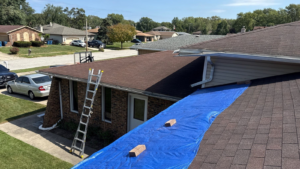
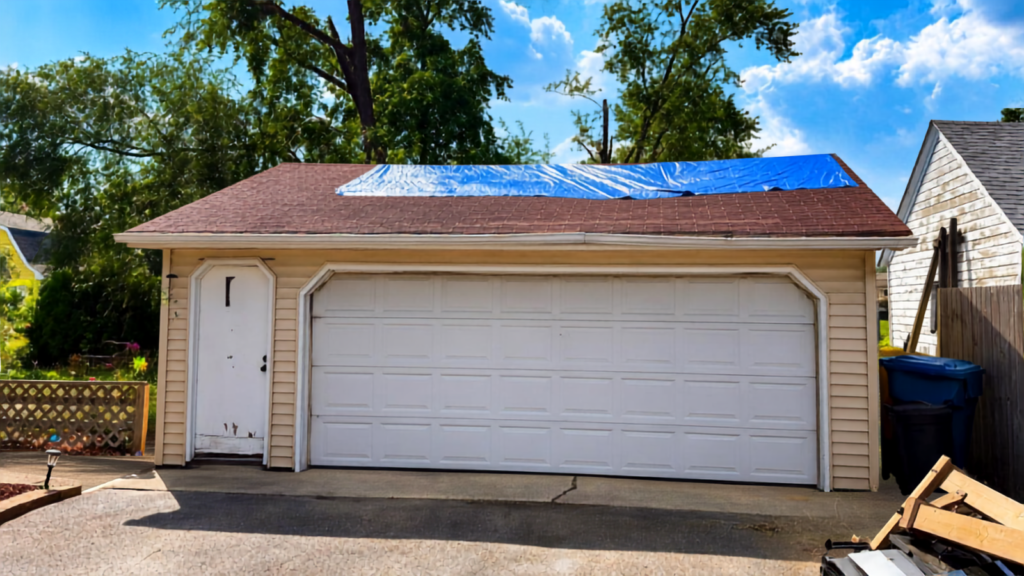
If roof damage Indiana conditions require emergency tarping, it is usually safer to have experienced professionals secure the area.
Temporary roof protection can help reduce water intrusion until permanent repairs can be completed, but it should never come at the expense of personal safety.
Schedule a Professional Roof Inspection
Not all storm damage is visible from your driveway.
Hail can bruise shingles or knock away protective granules without creating obvious holes. Wind can break adhesive seals and lift edges while leaving shingles attached.
A professional storm damage roof inspection evaluates shingles, flashing, valleys, vents, ridge caps, gutters, penetrations, and other critical areas.
When evaluating roof damage Indiana contractors should look at the entire system, not simply the most obvious damaged section.
An inspection helps determine whether the roof requires maintenance, targeted repair, or more extensive replacement.
Hail Damage Can Be Easy to Miss
Hail is one of the most difficult forms of roofing damage for homeowners to identify.
Impact marks may appear as small dark spots or areas of missing granules. In some cases, hail weakens shingles without causing immediate leaks.
Over time, these compromised areas can become more vulnerable to sunlight, rain, and future storms.
If a hailstorm has moved through Highland, a professional evaluation can help determine whether roof damage Indiana weather caused is significant enough to require repair.
Waiting until a leak develops may allow damage to spread unnecessarily.
Wind Damage Can Grow With the Next Storm
A strong wind event does not need to remove an entire section of roofing to create a problem.
If shingle seals are loosened, the next storm may lift those sections more easily. Once wind reaches underneath roofing materials, surrounding shingles can begin to fail.
This is why roof damage Indiana homeowners experience after one storm should be addressed before another storm arrives.
A small repair today can often prevent a larger and more expensive problem tomorrow.
Repair or Replacement Depends on the Extent of Damage
Discovering storm damage does not automatically mean you need a new roof.
If damage is limited to a small area and the rest of the roofing system remains in good condition, repairs may be enough. Missing shingles, localized flashing damage, and isolated leaks can often be corrected without replacing the entire roof.
However, widespread roof damage Indiana homes experience may make full replacement more practical. Extensive hail impacts, large areas of lifted shingles, damaged roof decking, repeated leaks, or an aging roofing system may change the recommendation.
A trustworthy contractor should explain both options clearly and help you understand which solution offers the best long term value.
Why Waiting Can Make Damage More Expensive
Roofing problems rarely improve on their own.
A small opening can allow water to reach the underlayment. Moisture can then spread to decking, insulation, framing, drywall, and ceilings.
By the time homeowners notice a major interior leak, the original roof damage Indiana storms caused may have been worsening for weeks or months.
Prompt inspections give you more choices and can help keep repair costs under control.
Why Highland Homeowners Turn to Ivan’s Roofing and Remodeling
Storm damage is stressful enough without wondering whether you are getting an honest recommendation.
At Ivan’s Roofing and Remodeling, we proudly serve Highland and homeowners throughout Northwest Indiana with professional roof inspections, storm damage evaluations, roof repair, emergency roofing solutions, and complete roof replacement services.
When we inspect roof damage Indiana homeowners are concerned about, our goal is to identify what actually happened and explain the next steps in straightforward language.
If a repair can restore your roof, we will tell you. If widespread damage makes replacement the smarter investment, we will explain what we found and why.
Final Thoughts
The hours and days after severe weather can determine whether roofing damage stays manageable or becomes a much larger home repair.
If you suspect roof damage Indiana storms have caused, start by protecting your family, checking the property from a safe location, documenting visible problems, and arranging a professional inspection.
Do not wait for water to pour through the ceiling before taking action.